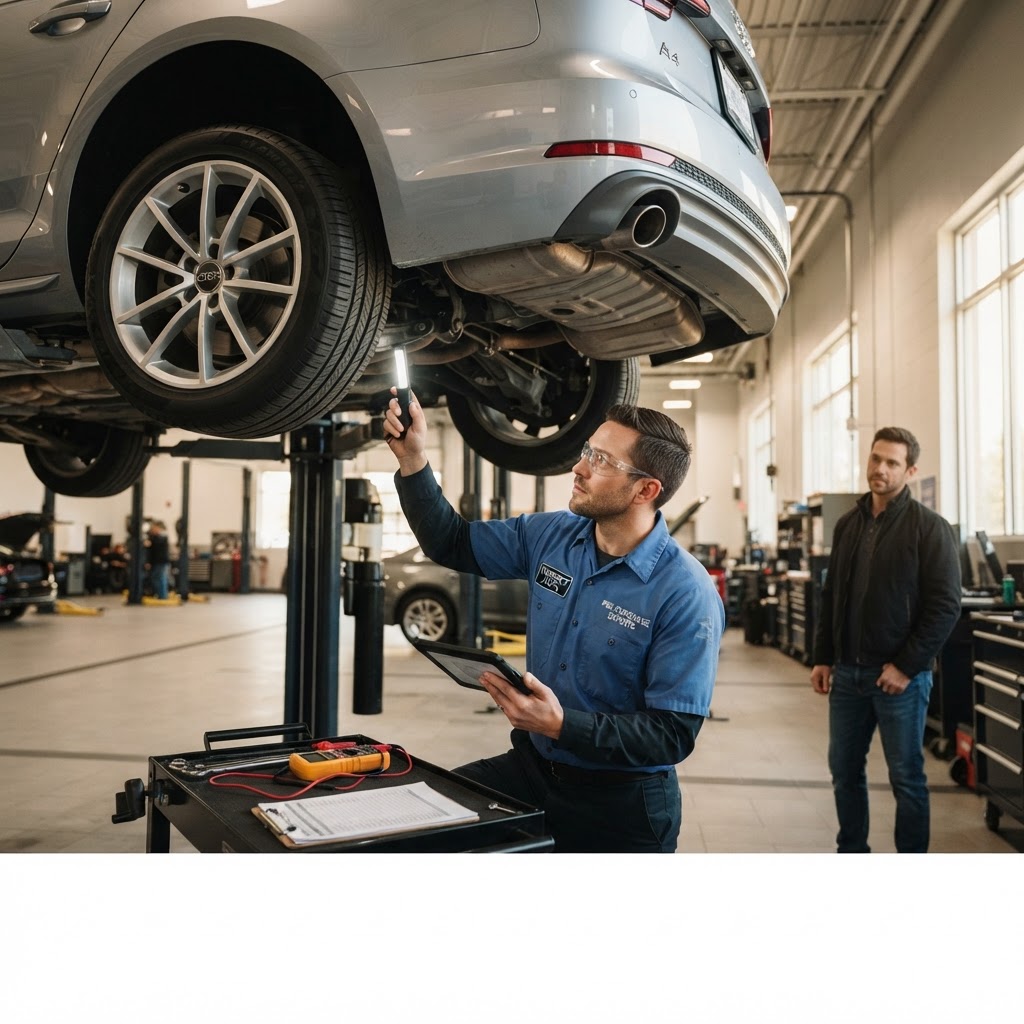
Don't gamble with your next vehicle. Discover why a RIZQ pre-purchase inspection is the single most important step to avoid costly repairs and safety risks.
The High Stakes of Used Vehicle Ownership
Entering the used vehicle market can feel like navigating a minefield. For the average buyer, credit union, or fleet manager, a vehicle is one of the most significant capital expenditures they will make. Yet, far too often, decisions are based solely on a shiny exterior, a clean vehicle history report, and a test drive that lasts less than fifteen minutes. This 'buy first, ask questions later' approach is the single largest contributor to buyer remorse and financial loss. A pre-purchase inspection (PPI) is not just an optional formality; it is the most critical step in the acquisition process.
The Illusion of History Reports
One of the most common pitfalls for buyers is relying exclusively on services like Carfax or AutoCheck. While these reports provide a valuable snapshot of past accidents or title issues, they are fundamentally limited. They only report what has been officially documented. If a previous owner repaired a major mechanical failure at an independent shop or handled a minor fender bender out-of-pocket to avoid a claim, it will never appear on a history report. A physical inspection from a service like RIZQ Vehicle Inspection acts as the 'truth-seeking' phase, revealing the wear, tear, and deferred maintenance that digital databases cannot track.
The Financial Reality of Buying Blind
When you purchase a vehicle without a professional inspection, you are effectively assuming all of the previous owner's deferred maintenance costs. A vehicle may look pristine, but what about the internal health of the engine, the condition of the transmission fluid, or the integrity of the suspension bushings? Consider the scenario where a transmission begins to fail shortly after purchase. The cost of a replacement can easily range from $3,000 to $7,000. Had a pre-purchase inspection been performed, this potential failure point could have been identified, giving you the leverage to negotiate a lower price or walk away entirely.
Lender Risk and Collateral Integrity
For credit unions and lenders, the pre-purchase inspection is a matter of portfolio protection. Lending against an asset requires verification that the collateral actually holds the value assigned to it. If a car has structural damage, flood history, or catastrophic mechanical issues that were hidden from the buyer, the lender is left with an under-collateralized loan. Implementing a consistent inspection protocol ensures that the vehicle serves as a sound investment, protecting the interest of both the lending institution and the borrower.
Safety as the Primary Driver
Beyond the spreadsheets and repair estimates, there is a human element to vehicle inspections. Tires with improper tread wear, brake lines on the verge of corrosion-induced failure, or hacked-together electrical repairs can turn a functional vehicle into a safety hazard. Buying a car without understanding its true mechanical state is a gamble with the lives of the passengers. A professional inspector looks for the nuances—the slight vibration in the steering column that indicates a failing rack and pinion or the uneven braking force that signals a hidden hydraulic issue.
Empowerment Through Information
The core value of an inspection is information asymmetry correction. Sellers usually know more about the vehicle’s flaws than buyers do. By bringing in a neutral third-party inspector, you bridge that gap. Whether you are an individual purchasing a commuter car or an equipment buyer vetting a piece of heavy machinery, the objective data provided by an inspection allows you to make an informed decision based on facts rather than emotion. You can find detailed information on how to schedule these services at rizqvehicleinspection.com to ensure your next purchase is backed by expert eyes. Ultimately, the cost of a pre-purchase inspection is negligible compared to the price of being stuck with a 'lemon.' By taking this one step, you transform a risky blind purchase into a strategic, calculated investment in your future mobility.